 Chicago
 By Day
 By Deal Type
 Neighborhoods
Rob Gordon runs a dying record store in Wicker Park, gets dumped, and spends the rest of the movie revisiting his "top five all-time most memorable breakups" while his two insufferable, wonderful employees mock his taste in music. The store itself — Championship Vinyl — never existed. Almost everything around it did, and still does.
This is a 2000 Stephen Frears film starring John Cusack, adapted from Nick Hornby's novel and relocated from London to Chicago for the screen — a move Cusack, a Chicago-area native himself (he grew up in Evanston), pushed for as a co-writer and producer. The result is one of the most accurately Chicago-shot movies on this list: real neighborhood, real venues, a built-set record store standing in for the one thing that was never real.
Championship Vinyl: A Real Wicker Park Storefront, a Built Interior
The record store's exterior is a real building at the corner of Milwaukee Avenue and Honore Street, with a vintage six-flat apartment building rising above it — reportedly rehabbed around the time of filming. The store interior itself, though, was a set built for the production; Championship Vinyl was never a working business you could have walked into, before or after the movie. The storefront has cycled through other retail tenants in the years since.
Why it matters: This is the same move Ferris Bueller's "Chez Quis" restaurant and The Blues Brothers' orphanage made — a real address standing in for something that only exists on film.
The Green Mill: Already One of Our Own Real-Chicago Stories
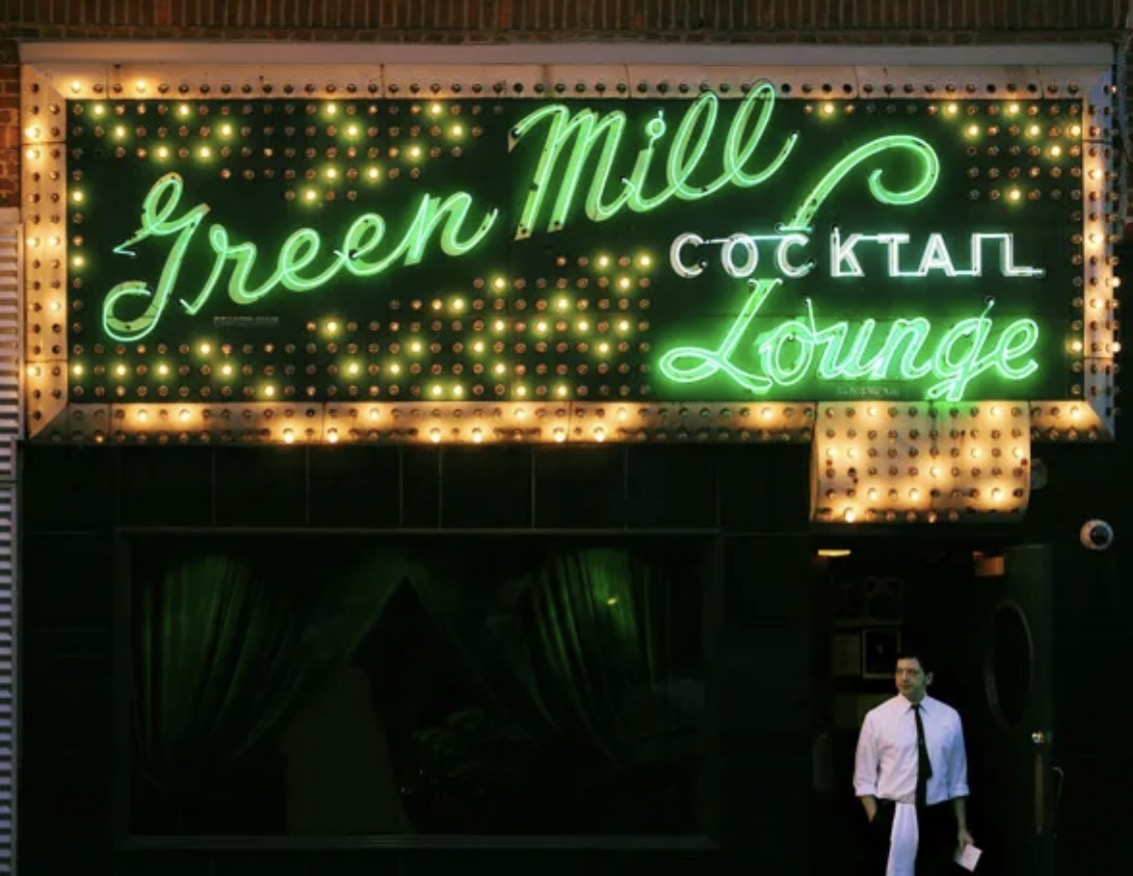
The movie uses the real Green Mill, Chicago's legendary jazz lounge, as one of its music-venue backdrops. We've already written the Green Mill's own history in detail — including the famous "Capone's booth" legend that's almost certainly false — in our Finds piece on the bar. It's a working jazz club tonight, same as it was in 2000, same as it's been since 1907.
The Rainbo Club: Where Rob Tentatively Proposes to Laura
Rob proposes to Laura over a lunchtime drink at the real Rainbo Club, a laid-back Wicker Park dive bar with a working photobooth — the same photobooth that's become one of the bar's defining features, and the subject of its own Finds writeup on this site. Like the Green Mill, it's still open, still a dive bar, still basically the same vibe two and a half decades later.
The Double Door: A Real Venue, Currently in Limbo
The movie's climax — Jack Black's character fronting a band at a packed show — and an earlier record-release-party scene both play out at the real Double Door, a genuine Wicker Park music venue at the corner of Milwaukee and Damen. The Double Door closed in 2017 after an eviction dispute with its landlord. A planned revival in a historic Uptown theater was announced for 2024–25, but the most recent reporting we could find suggests that plan fell through, and we couldn't confirm a current open status anywhere — so treat the Double Door as a real, important part of this movie's history rather than a place to plan a visit around right now.
The Kinzie Street Bridge: The "Things I Miss About Laura" Monologue
One of the movie's quieter, more direct-to-camera moments — Rob listing everything he misses about Laura — is set on the real Kinzie Street Bridge, one of the Chicago River's many movable bridges, a few blocks from where the river splits into its three branches.
The Biograph Theater: A Second, Completely Unrelated Famous Chicago Story
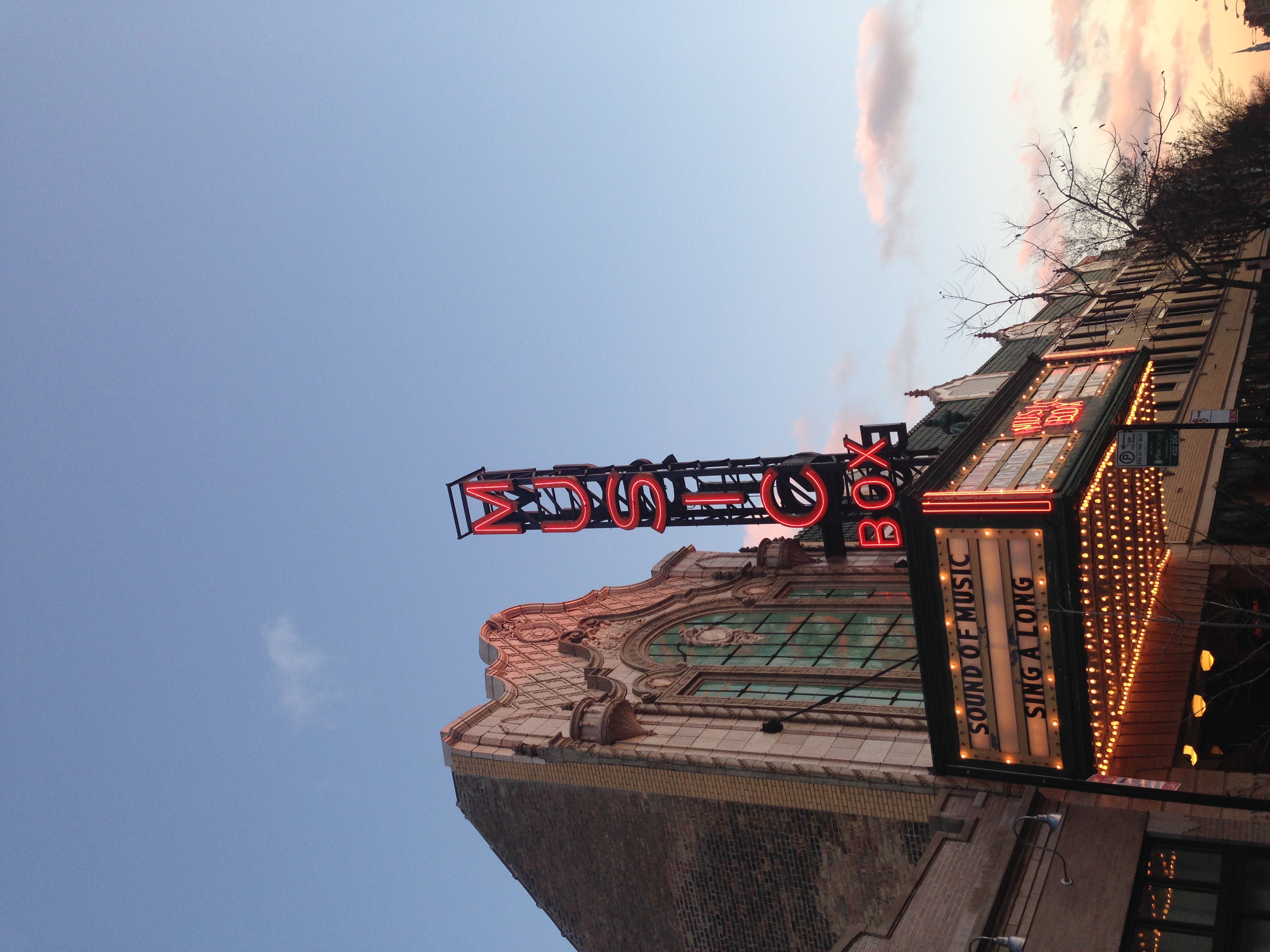
The production also used the real Biograph Theater on Lincoln Avenue — a working movie theater with its own, much darker claim to fame: it's where notorious bank robber John Dillinger was shot and killed by FBI agents in 1934, moments after he left a screening inside. High Fidelity has nothing to do with Dillinger. The building just happens to carry both stories.
Fun tidbit: A single Chicago building hosting two completely unconnected pieces of film/true-crime trivia, decades apart, is a more common Chicago-movie pattern than you'd expect — this series of guides has already run into it with City Hall doing double duty for both The Fugitive and The Blues Brothers.
The CTA Red Line: Real Trains, Real Platforms
Beyond the named venues, the production also used real Chicago Transit Authority Red Line trains and platforms for several transit scenes scattered through the movie — a small, easy-to-miss detail that's nonetheless genuinely Chicago, not a studio mockup of a subway car.
John Cusack Was a Real Chicagoan, and He Fought to Keep It That Way
Nick Hornby's original novel is set in London. Moving the story to Chicago for the film wasn't a studio default — it was a deliberate choice pushed by Cusack, who grew up in Evanston and co-wrote the screenplay with his longtime collaborators. The same instinct that made John Hughes insist on filming his own teenage Chicago suburbs, or made The Fugitive's Andrew Davis use a real parade instead of a fake one, shows up again here: a Chicago-area filmmaker who had the leverage to say "it has to actually be here," and used it.
The record store was invented. The jazz club, the dive bar, the movie theater, and the bridge weren't.
The Completionist Checklist
For anyone tracing the real Chicago footprint of this movie: the Championship Vinyl storefront at Milwaukee & Honore (Wicker Park), the Green Mill (Uptown), the Rainbo Club (Wicker Park), the former Double Door at Milwaukee & Damen (Wicker Park, current status unconfirmed), the Kinzie Street Bridge (River North), and the Biograph Theater (Lincoln Park). Championship Vinyl's interior is the one deliberate exception — it was a built set, and the business itself never existed.
That's the real route. Five real, mostly still-open stops, one real venue in limbo, and a record store that was never anything but a movie set.
Get more from The Scoop
One email a week: the next field guide, Gem of the Week, and the specials worth planning around. No spam, just the good stuff. (Chicago City Hall gets a second, completely different movie climax in the Fugitive field guide, live now.)