 Chicago
Most bars that end up famous get there on purpose — a concept, a build-out, a publicist. The Rainbo Club got famous because a record label said no at the worst possible time.
In 1993, Liz Phair sent Matador Records a cover photo for her debut album, Exile in Guyville. The label rejected it. With a deadline closing in and nothing else ready, Urge Overkill's Nash Kato art-directed an emergency replacement shoot the only place still open that late: the Rainbo Club's black-and-white photobooth, a few blocks from where half the city's indie-rock scene already drank most nights. The shot ran. The booth is still there, still working, still charging the same few dollars a strip — sit down and you're using the same machine.
A Drugstore, or a Speakeasy, or Both
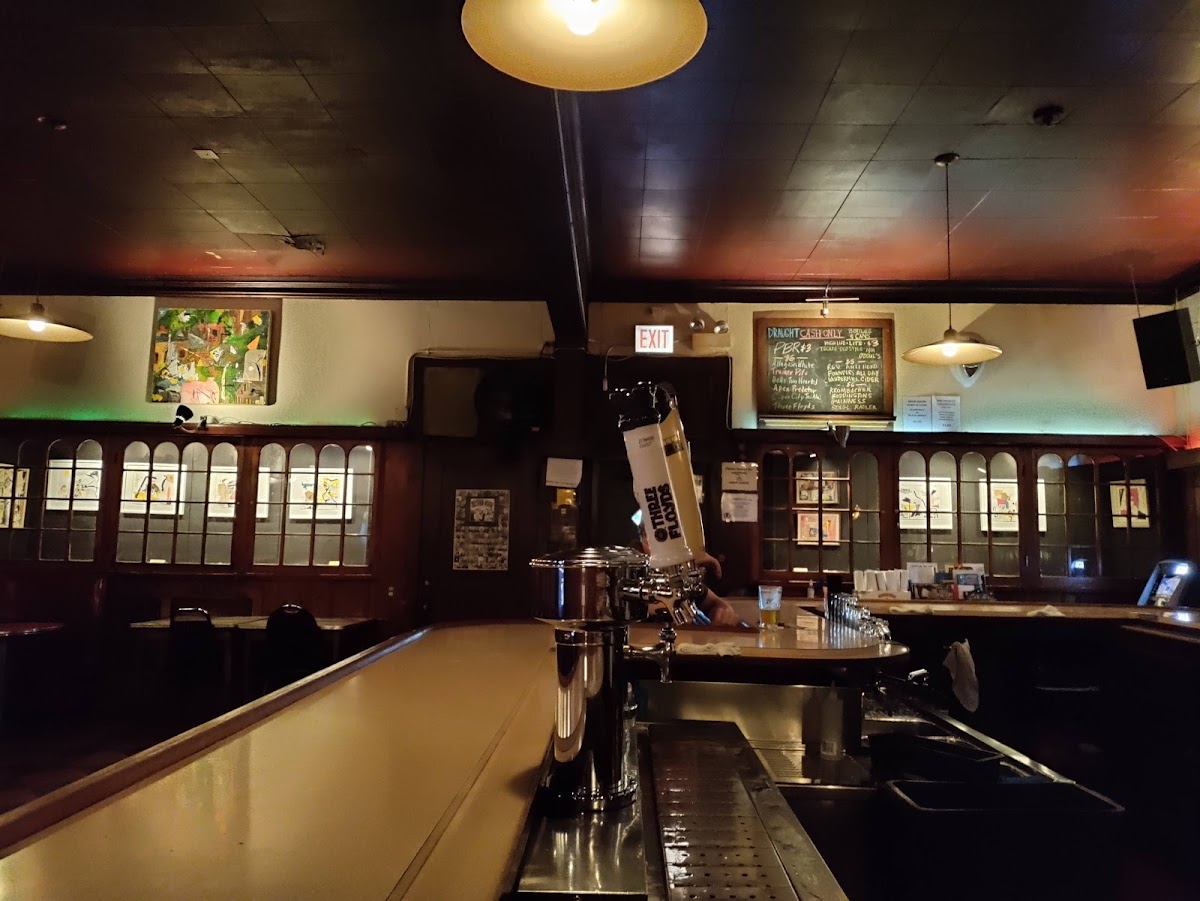
The building has been a bar on this corner since around 1933, right at the end of Prohibition — and neighborhood lore has always held that it ran as part speakeasy, part drugstore before that, the kind of dual-purpose cover story plenty of Chicago bars needed to survive the 1920s. Nobody's nailed down a clean paper trail on that part, and the Rainbo Club has never seemed especially interested in correcting the record either way. The big stage against one wall is real and dates back further than the current bar does — a holdover from the room's years as a burlesque and jazz venue, when a different generation came for a different reason.
Nelson Algren was one of the regulars. The ur-Chicago novelist is said to have used a version of the bar as the model for the Tug & Maul tavern in The Man with the Golden Arm — a direct line from a stool at this bar to one of the defining Chicago novels of the 20th century.
Three Owners, One Mostly Unchanged Room
A Polish couple ran the Rainbo Club for decades before selling it to Dee Taira and Gavin Morrison in the mid-1980s. Taira and Morrison made one decision that mattered more than any other: they kept the sign and most of the room exactly as they found it. That choice is the whole reason this piece is possible — a renovated version of this bar doesn't end up as the backdrop for a generation-defining album cover, and it doesn't stay the kind of place Urge Overkill, Tortoise, and Phair herself kept coming back to all through the '90s. It's also, per multiple cast and crew accounts, where John Cusack's character proposes over a lunchtime drink in 2000's High Fidelity — one more thing this room has quietly hosted without ever advertising it happened.
Today it still runs the same way it always has: cash-friendly, red leather booths, a neon sign with a martini glass wedged into the lettering, and a bar that's never once needed to explain itself to a new regular.
The move: $5 well cocktails run all day, every day — genuinely one of the better standing deals in the neighborhood, not a happy-hour-only teaser. Open daily from 4PM (2AM close Sun-Fri, 3AM Saturdays). Cash is the easier way to go.
Finds is where we go looking for the places that never bought an ad and never needed to. Know a Chicago-area spot that belongs on the next one?
Nominate a Gem →