 Chicago
 By Day
 By Deal Type
 Neighborhoods
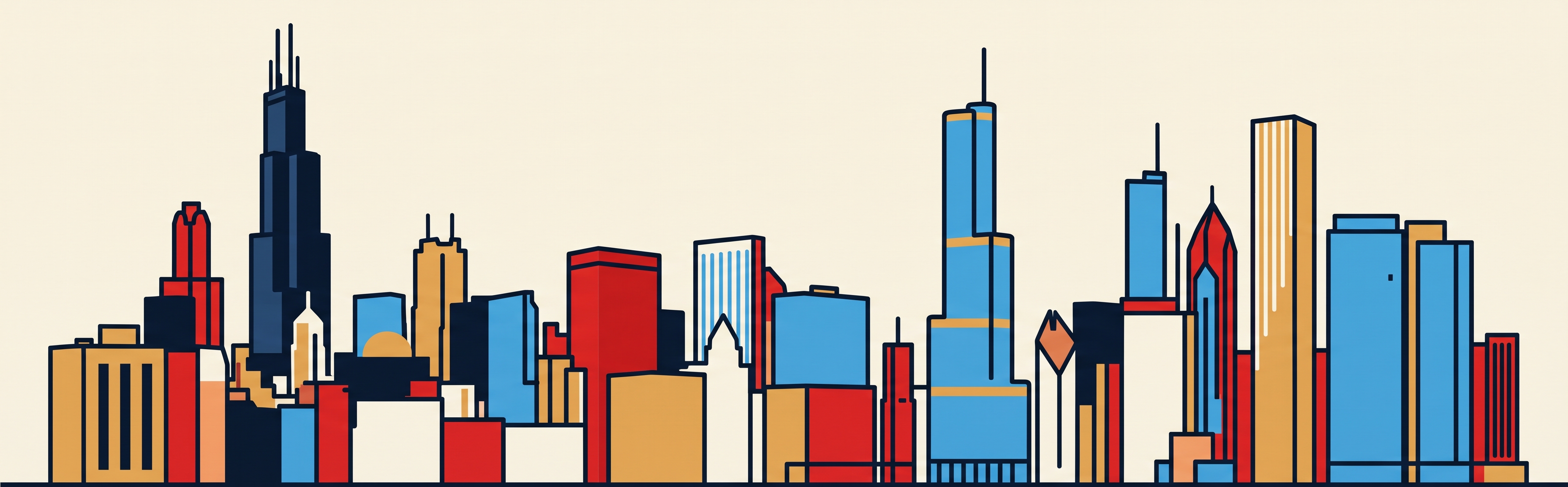
Gotham City has never had an official map, because Gotham City isn't real. But across Batman Begins (2005) and The Dark Knight (2008), Christopher Nolan built it almost entirely out of one real one: downtown Chicago, filmed close enough to itself that LaSalle Street's own skyline essentially cameos as its own stand-in.
This wasn't Chicago playing a generic big city the way it sometimes does. It's Chicago playing a very specific, recognizably Chicago-shaped Gotham — the same Loop street grid, the same Lower Wacker underpasses, the same financial-district canyon, dressed just enough to be fictional. Here's what's real, what got blown up for real, and why Chicago's whole Gotham run quietly ended after this movie.
The Old Main Post Office: Gotham's Bank and Gotham's Police Precinct, Two Movies, One Building
The massive, half-abandoned Old Main Post Office — the one that straddles the Eisenhower Expressway, with eight lanes of traffic running directly underneath it — did double duty across both films. In The Dark Knight, its exterior played the Gotham bank from the opening heist, with the Joker's crew making their rooftop entrance from the building's own roofline. In Batman Begins, the same building's facades were dressed as both "Gotham National Bank" on one side and a Gotham police precinct on another.
The building sat largely vacant for years before a $600 million redevelopment turned it into leased office space with a 3.5-acre rooftop park, which opened in 2020. One of its real-world tenants today is Ferrara Candy — which, through a chain of acquisitions, is the company that currently owns the Brach's brand. That's a genuine coincidence worth sitting with for a second, because Brach's own actual, real factory building gets blown up a few miles away, later in this same guide.
LaSalle Street: Where a 40-Foot Trailer Flipped End Over End, for Real
The Joker's truck chase in The Dark Knight ends with one of the most purely practical stunts in the trilogy: a real 40-foot tractor-trailer, flipped completely end over end on LaSalle Street, right in front of the Chicago Board of Trade building. No CGI double, no miniature — just roughly six weeks of structural calculations and test runs before the crew actually closed the street and did it.
Why it matters: LaSalle Street's own real identity — Chicago's historic financial canyon, lined with banks and the Board of Trade — is exactly why it reads as Gotham's financial district without much set dressing at all. The street was basically typecast.
Lower Wacker Drive: The Chase Route Chicago Built Decades Before Either Movie Needed It
Both films send their biggest car-chase sequences through Lower Wacker Drive — the covered lower level of Chicago's two-tier Wacker Drive, built in the 1950s to separate through-traffic from local streets along the river. It's dark, double-decked, and acoustically ideal for a chase scene, which is presumably why Nolan's crews used it twice and why it had already been doing exactly this job for Hollywood decades earlier: it's the same underground stretch where, in 1980, a Bluesmobile instead of a Tumbler ran its own chase scenes in The Blues Brothers.
The Richard J. Daley Center: Wayne Enterprises' Corner Office
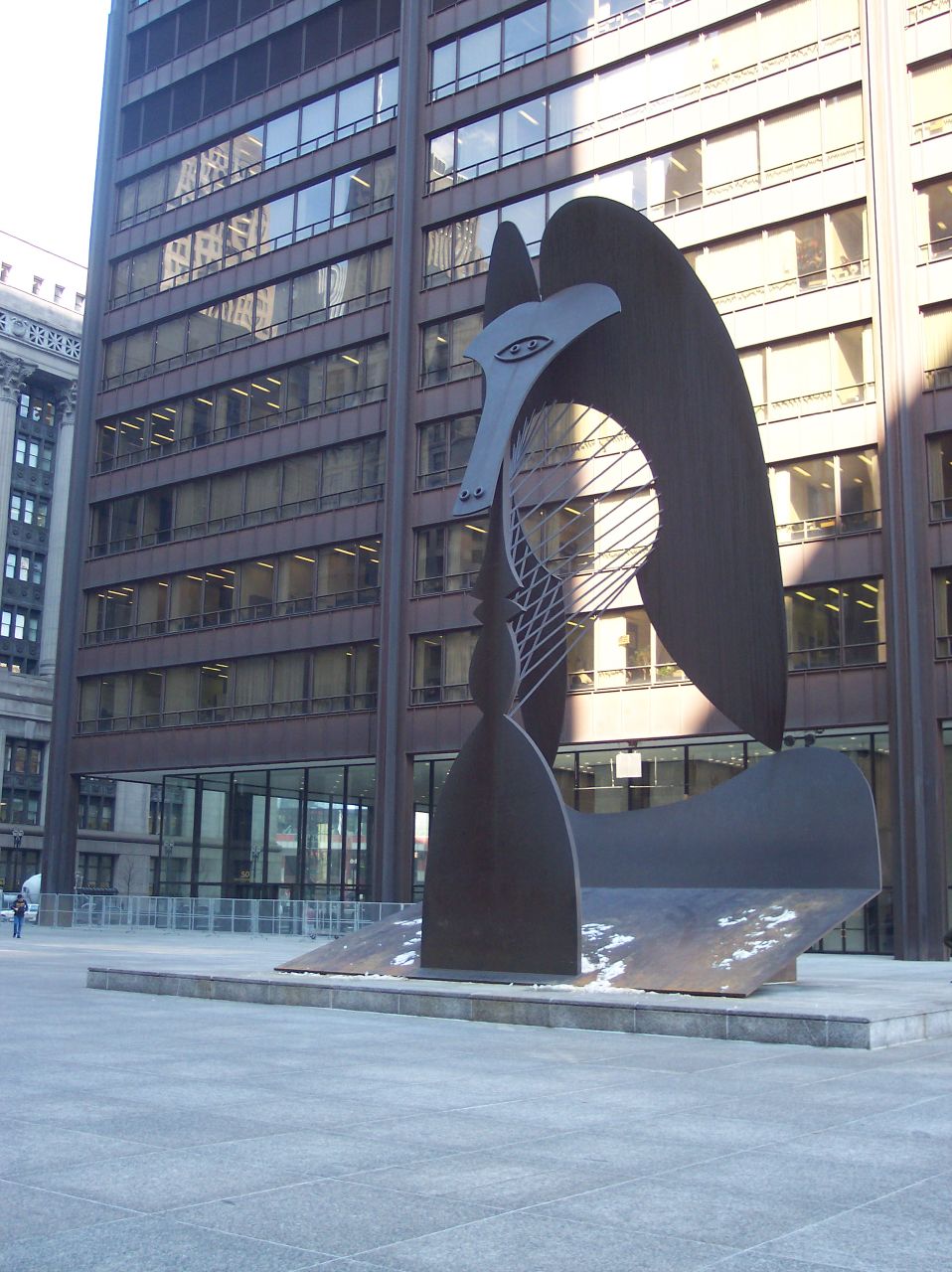
In The Dark Knight, the Richard J. Daley Center — the same building with the Picasso out front — plays Wayne Enterprises' corporate headquarters, along with the in-film offices of Harvey Dent, the police commissioner, and the mayor. One film earlier, in Batman Begins, that same corporate-HQ role had actually been filled by the Chicago Board of Trade building instead — meaning this franchise recast its own fictional company's headquarters between movies, using two different real Chicago landmarks a few blocks apart.
The Old Brach's Candy Factory: A Real Building, Actually Demolished on Camera
This is the one that isn't a visual effect. For The Dark Knight's "Gotham General Hospital" explosion, the production took over the real, abandoned Brach's Candy Company factory and rigged it with practical demolition charges — then blew it up for the camera. By most accounts, the explosion actually went off slightly ahead of cue, and the earlier-than-planned blast is what made it into the finished film.
The hospital that explodes in this movie isn't a model or a visual effect. It's a real Chicago factory building, actually demolished, on purpose, on camera.
Trump International Hotel & Tower: A Construction Site Playing a Construction Site
Trump International Hotel & Tower was still an active construction site when both films shot there, and the production leaned into it rather than hiding it: the unfinished tower's own cranes and structural steel became the practical set dressing for the finale's construction-site confrontation exteriors. Some of the more elaborate confrontation beats were finished separately on a soundstage at Pinewood Studios in the UK, so not every frame in that sequence is actually Chicago — but the skeleton of the building itself is real, and it was genuinely still being built.
The Half of Gotham That Was Never Chicago at All
Here's the part that reframes the whole series: Chicago plays Gotham's financial and civic core across these two films — the banks, the Board of Trade, City Hall's building family, the elevated expressway — but it was never asked to be all of Gotham. Wayne Manor, Arkham Asylum, and the Narrows were shot largely in England and Iceland, not Illinois. And Chicago's run as Gotham ended here: when the trilogy concluded with The Dark Knight Rises in 2012, Nolan shot Gotham's exteriors almost entirely in Pittsburgh instead, with additional work in New York, Los Angeles, and the UK. Chicago's downtown doesn't appear in the third film at all.
Why it matters: For exactly two movies, Chicago wasn't standing in for a generic skyline — it was standing in for the specific, recognizable idea of itself, just renamed. Then the franchise moved on, and the real city went back to being the real city.
The Completionist Checklist
For anyone tracing the real Chicago footprint of Nolan's Batman films: the Old Main Post Office (West Loop), LaSalle Street and the Chicago Board of Trade (The Loop), Lower Wacker Drive (The Loop), the Richard J. Daley Center (The Loop), the former Brach's Candy factory site (West Side), and Trump International Hotel & Tower (River North). Wayne Manor and Arkham Asylum are the deliberate exceptions — they were never Chicago to begin with, and The Dark Knight Rises left the city out entirely.
That's the real route. Six real stops, one building that got blown up for real, and a city that played a fictional one convincingly enough to make a sequel's absence feel like a snub.
Get more from The Scoop
One email a week: the next field guide, Gem of the Week, and the specials worth planning around. No spam, just the good stuff. (Lower Wacker Drive had its first Hollywood chase scene 28 years earlier — see the Blues Brothers field guide, live now.)